
"Madagascar coffee"
700 article(s) found
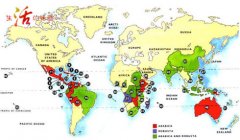
Map of Global Coffee producing areas
1. Costa Rica Costa Rica 2. Cuba Cuba 3. Dominican Republic Dominican Republic 4. Ei Salvador El Salvador 5. Guadeloupe Guadeloupe 6. Guatemala Guatemala 7. Haiti Haiti 8. Honduras Honduras 9. Jamaica Jamaica 10. Martinique Martinique 11. Mexico Mosi

Map of Coffee Bean producing areas in the World
1. Costa Rica Costa Rica 2. Cuba Cuba 3. Dominican Republic Dominican Republic 4. Ei Salvador El Salvador 5. Guadeloupe Guadeloupe 6. Guatemala Guatemala 7. Haiti Haiti 8. Honduras Honduras 9. Jamaica Jamaica 10. Martinique Martinique 11. Mexico Mosi

Robasta seed bean shape larger, obverse gradually round, convex abaxial, crack straight
Bean shape is larger, the front gradually round, the back was round convex, crack straight. Robasta coffee trees are native to Madagascar in central and western Africa and Indonesia in Asia, accounting for about 20% to 30% of the world's production. Robasta coffee tree is suitable for planting in lowlands below 500 meters above sea level, and is extremely adaptable to the environment, able to resist harsh weather and resist

Introduction of 53 Coffee producing areas in the World
1. Costa Rica Costa Rica 2. Cuba Cuba 3. Dominican Republic Dominican Republic 4. Ei Salvador El Salvador 5. Guadeloupe Guadeloupe 6. Guatemala Guatemala 7. Haiti Haiti 8. Honduras Honduras 9. Jamaica Jamaica 10. Martinique Martinique 11. Mexico Mosi
Members of the International Coffee Organization: importing and exporting members
Angola Austria Austria Benin Benin Belgium / Luxembourg Belgium/Luxemburg Bolivia Bolivia UK Britain Brazil Brazil Cyprus Cyprus Burundi Burundi Denmark Denmark Cameroon Cameroon Finland Finland Central African Republic Central African R.
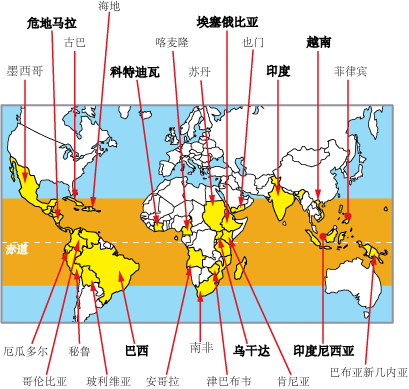
Introduction of 53 Coffee producing areas in the World
1. Costa Rica Costa Rica 2. Cuba Cuba 3. Dominican Republic Dominican Republic 4. Ei Salvador El Salvador 5. Guadeloupe Guadeloupe 6. Guatemala Guatemala 7. Haiti Haiti 8. Honduras Honduras 9. Jamaica Jamaica 10. Martinique Martinique 11. Mexico Mosi

Which countries produce coffee?
1. Costa Rica Costa Rica 2. Cuba Cuba 3. Dominican Republic Dominican Republic 4. Ei Salvador El Salvador 5. Guadeloupe Guadeloupe 6. Guatemala Guatemala 7. Haiti Haiti 8. Honduras Honduras 9. Jamaica Jamaica 10. Martinique Martinique 11. Mexico Mosi

Coffee bean variety grade Colombian flavor
The main varieties of Colombian coffee are Arabica coffee (coffea arabica), that is, small fruit coffee (small grain coffee). Relatively speaking, large fruit coffee (coffea robusta) is mostly grown in Africa of origin, such as the famous Madagascar coffee. There are several varieties of small fruit coffee. Brazilian coffee, which has the highest yield in the world, has large seeds, strong adaptability and high fruit yield.
Introduction of Coffee beans Distribution Map of Coffee growing areas in the World
1. Costa Rica Costa Rica 2. Cuba Cuba 3. Dominican Republic Dominican Republic 4. Ei Salvador El Salvador 5. Guadeloupe Guadeloupe 6. Guatemala Guatemala 7. Haiti Haiti 8. Honduras Honduras 9. Jamaica Jamaica 10. Martinique Martinique 11. Mexico Mosi
Colombian coffee bean variety grade Arabica coffee bean characteristic flavor
The main varieties of Colombian coffee are Arabica coffee (coffea arabica), that is, small fruit coffee (small grain coffee), while large fruit coffee (coffea robusta) is mostly grown in Africa of origin, such as the famous Madagascar coffee. There are several varieties of small fruit coffee. Brazilian coffee, which has the highest yield in the world, has large seeds and strong adaptability.
The general knowledge of fine coffee explains the types of coffee.
Today, there are two main types of coffee grown most widely in the world: Arabica beans (Coffee Arabica) and Robota beans (Coffee Robusta). Arabica Arabica Robusta Robusta is mainly produced in tropical Central and South America, accounting for 3/4 of the world's output. It is produced in Madagascar in central, western and eastern Africa, and Indonesia in Asia.
Know Arabica Robusta coffee beans
In terms of varieties, coffee trees are mainly divided into two types: one is Arabica, and the other is Robusta Arabica Robusta, which is mainly produced in tropical Central and South America and on the island of Madagascar in west and central Africa. Indonesia in Asia is planted on alpine slopes at an altitude of 9002000 meters above sea level and on alpine slopes at an altitude of 200600 meters above sea level.
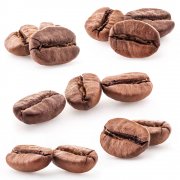
Output accounts for about 20% to 30% of the world's output. Robasta Coffee Tree Commercial Coffee
The bean shape of Robasta is larger, the front is gradually round, the back is round and convex, and the crack is straight. Robasta coffee trees are native to Madagascar in central and western Africa and Indonesia in Asia, and account for about 20% to 30% of the world's output. Robasta coffee tree is suitable for planting in the lowlands below 500 meters above sea level. It has strong adaptability to the environment and can resist bad conditions.

There are two main types of coffee that are most widely grown in the world today.
Today, there are two main types of coffee grown most widely in the world: Arabica beans (Coffee Arabica) and Robota beans (Coffee Robusta). Arabica Arabica Robusta Robusta is mainly produced in tropical Central and South America, accounting for 3/4 of the world's output. It is produced in Madagascar in central, western and eastern Africa, and Indonesia in Asia.
Arabica Robusta coffee beans
In terms of varieties, coffee trees are mainly divided into two types: one is Arabica, and the other is Robusta Arabica Robusta, which is mainly produced in tropical Central and South America and on the island of Madagascar in west and central Africa. Indonesia in Asia is planted on alpine slopes at an altitude of 9002000 meters above sea level and on alpine slopes at an altitude of 200600 meters above sea level.
Arabica and Robusta Coffee Beans
In terms of varieties, coffee trees are mainly divided into two species: Arabica and Robusta Arabica Robusta, which are mostly grown in tropical Central and South America, Madagascar Island in central and western Africa and Indonesia in Asia. They are planted on high mountain slopes at an altitude of 9002000 meters. They need high artificial density to be cultivated on high mountain slopes at an altitude of 200600 meters.
Arabica and Robusta coffee beans
In terms of varieties, coffee trees are mainly divided into two types: one is Arabica, and the other is Robusta Arabica Robusta, which is mainly produced in tropical Central and South America and on the island of Madagascar in west and central Africa. Indonesia in Asia is planted on alpine slopes at an altitude of 9002000 meters above sea level and on alpine slopes at an altitude of 200600 meters above sea level.

There are two main types of coffee that are most widely grown in the world.
Today, there are two main types of coffee grown most widely in the world: Arabica beans (Coffee Arabica) and Robota beans (Coffee Robusta). Arabica Arabica Robusta Robusta is mainly produced in tropical Central and South America, accounting for 3/4 of the world's output. It is produced in Madagascar in central, western and eastern Africa, and Indonesia in Asia.
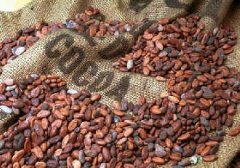
Compare coffee beans with Arabica Robusta coffee beans
In terms of varieties, coffee trees are mainly divided into two types: one is Arabica, and the other is Robusta Arabica Robusta, which is mainly produced in tropical Central and South America and on the island of Madagascar in west and central Africa. Indonesia in Asia is planted on alpine slopes at an altitude of 9002000 meters above sea level and on alpine slopes at an altitude of 200600 meters above sea level.